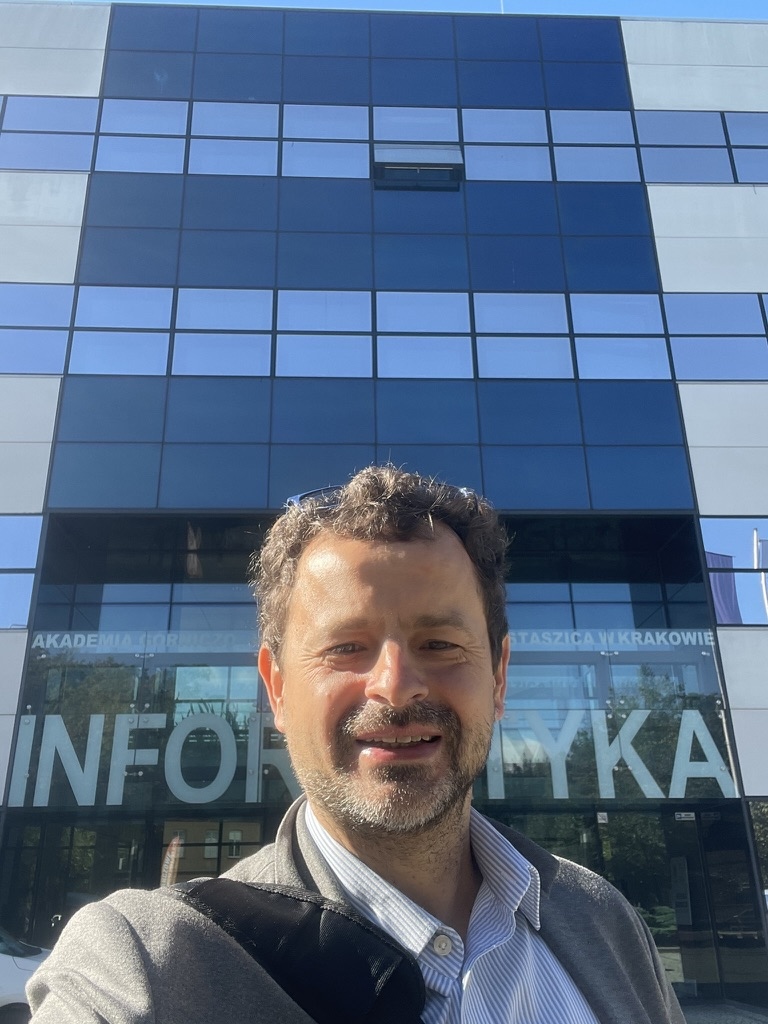
Biography
Bartosz Ziółko (PhD), AGH professor, individual investor. He was the co-founder and CEO of Techmo - a technology company providing solutions in the field of speech recognition and generation.
Studies in Electronics and Telecommunications at AGH. PhD in Computer Science at the University of York. Habilitation in 2017. Over 100 scientific papers, two patents granted by the USPTO and one by the EPO. Author of the book "Speech Processing". Scholar at Hokkaido University in Japan, participant of the TOP 500 Innovators program at Stanford.
Research Interests
His research interests include:
- Financial Data Analysis
- LLM-based reasoning across heterogeneous data sources
- Automatic speech recognition (ASR)
- Natural language processing (NLP)
- Prediagnosis of diseases based on speech
He participated in over 10 national and European research projects. The company he built created a speech recognition system that processed over 100 million conversations.
Courses currently taught
- Text Algorithms
- Natural Language Processing
- Databases in Data Mining
- Bachelor's Seminar in Social Informatics
Courses previously taught
- Evolutionary Algorithms
- Multidimensional Data Analysis
- Data Exploration
- Speech Technologies
- Information Technologies
- AI in computer games
Suggestions for topics for diploma theses
Bachelor's, engineer's, master's, and doctoral theses in the field of financial data analysis and reasoning using the LLM to support investment decisions. Please search the APD system and the Doctoral School website for current topics, or contact us by email.